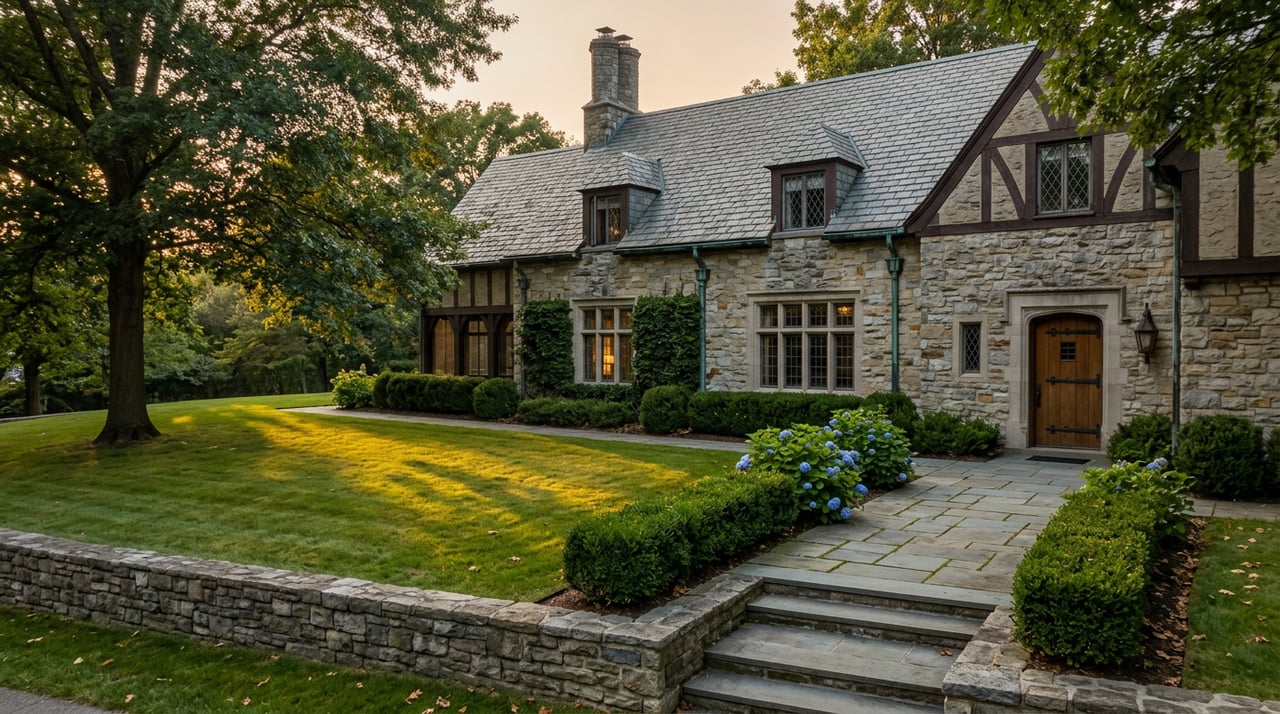
Walk the loop most residents use for a morning circuit and you will hit a chain-link fence before you hit the gate you actually wanted. The path between the Cathedral and the Administration Building, the shaded stretch known as the Garth, has been closed for work on the central tower. Keep walking south toward Wisconsin Avenue and you will pass another kind of closure: the dark storefront windows of the old Cafe Deluxe space, more recently home to Talea, sitting empty at 3228 Wisconsin.
Neither closure is dramatic by itself. A construction fence and a vacant lease are ordinary things in any city. What makes them worth noticing together is what they say about how this particular neighborhood actually works. Massachusetts Avenue Heights has no commercial strip of its own. It also, in a technical sense, has no park of its own. The green space residents treat as a backyard belongs to the Cathedral. The restaurants residents treat as their dining room sit one neighborhood over, in Cathedral Heights, on a stretch of Wisconsin Avenue governed by leasing decisions made in Georgetown and Alexandria. This fall, both of those borrowed institutions happen to be mid-transition at the same time, and neither transition is something a resident here gets a vote on.
The park you don't own
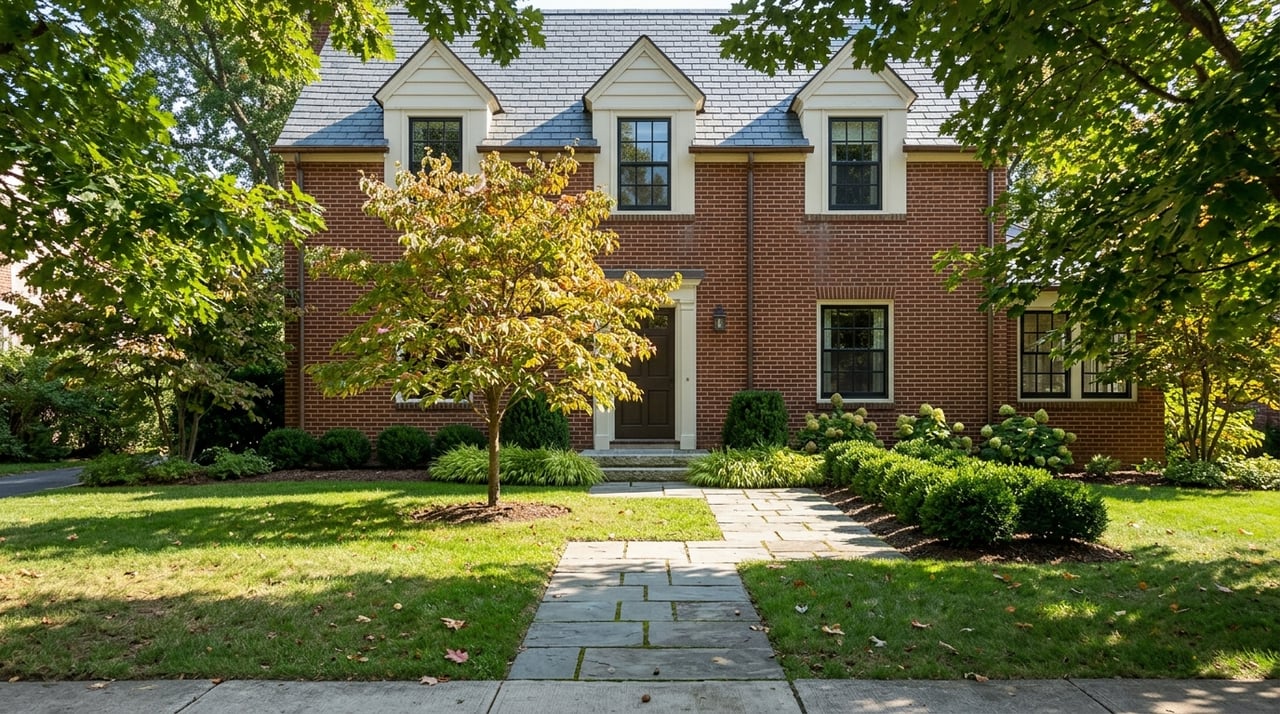
Most of what shows up on a map as Massachusetts Avenue Heights is not residential at all. The only houses sit in a narrow triangular wedge between Massachusetts Avenue and Garfield Street, tucked against Observatory Circle and the grounds of the Vice President's Residence. The rest of the neighborhood, more than fifty acres, belongs to Washington National Cathedral: the Bishop's Garden, the Olmsted Woods, the school playing fields, the Cathedral Close.
That arrangement is normally a point of pride rather than a limitation. Residents get fifty-seven acres of designed landscape, stone footpaths, and old-growth forest without paying to maintain any of it. But the tradeoff is that the Cathedral itself, not the neighborhood, decides what stays open. Right now the Cathedral's own site confirms the Garth and the adjoining All Souls Memorial Garden are closed for the tower restoration, and the update posted this June was blunt about the timeline: the Cathedral does not expect the Garth to reopen before late fall 2026, with no firm date yet attached to that estimate.
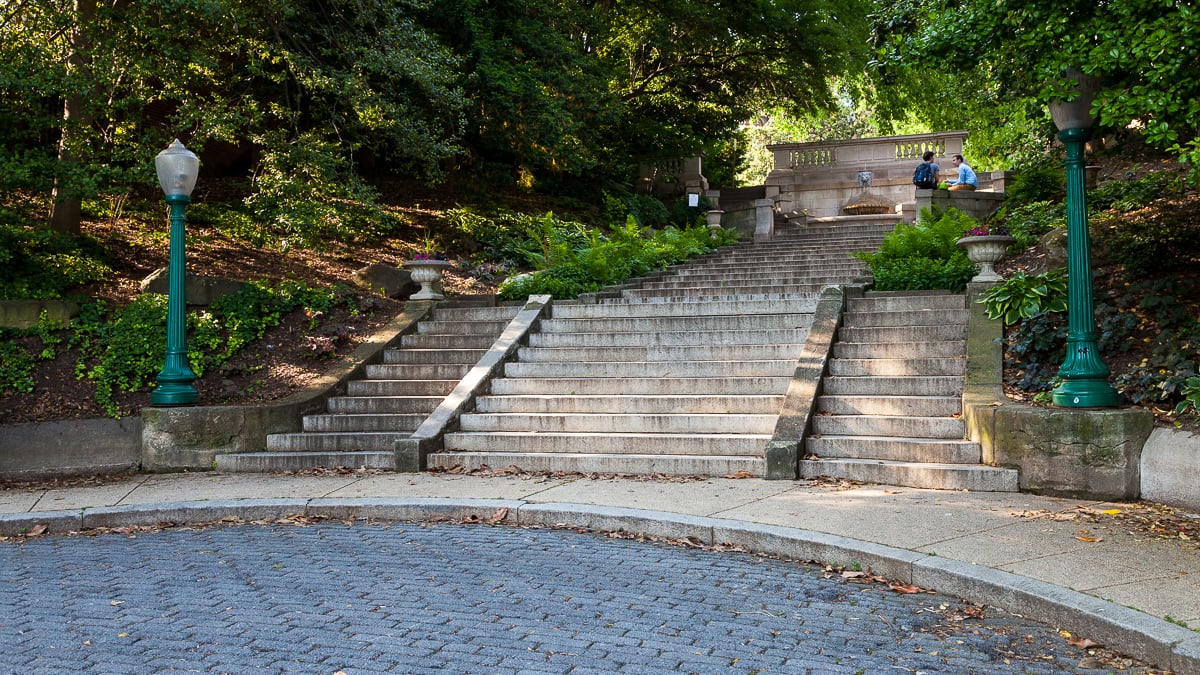
For a daily walker, that means rerouting. The Bishop's Garden on the Cathedral's south side is unaffected and remains the better option for a slower loop, with its stone gazebo and the walled quiet that made it a private garden in the first place before it opened more broadly in 1928. Olmsted Woods, the stretch of oak and beech forest that is one of the only pieces of old-growth canopy left inside the District, is also open, though its footbridge stays out of commission after storm damage. Residents looking for more distance than the grounds alone provide have Lovers Lane, the roughly 3.5-mile path that runs from the embassies along Massachusetts Avenue through Rock Creek Park to Dumbarton Oaks in Georgetown, a route that predates the current construction fence by decades and doesn't depend on the Cathedral's schedule at all.
The restaurant you're still waiting on
The other closure is smaller in acreage but bigger in neighborhood gossip. When Talea closed at 3228 Wisconsin Avenue, in the space that had been Cafe Deluxe before it, the corner became the subject of two competing reports that still haven't been reconciled.
In late February, a DC food industry blog reported that Flavio, the Georgetown Italian spot known for stone-baked pizza and branzino, was preparing to open a Cathedral Heights location in that space, complete with a speakeasy concept. Two weeks later, PoPville published a different answer, pointing to a liquor license posting for Augie's Mussel House and Beer Garden, the Belgian-inspired concept with locations in Old Town Alexandria and Annapolis Town Center. The filing described a Class C restaurant with 140 seats, a 32-seat sidewalk cafe, and a request for a live entertainment endorsement.
Neither outlet has published a follow-up since March. That gap tells you something about the corner itself as much as about either restaurant. This is a storefront in a stretch of Wisconsin Avenue too small to have its own dedicated newsroom, which means residents are left triangulating between a restaurant's own marketing copy and a public notice board, waiting for scaffolding or a paint job to settle an argument that neither company has bothered to clarify for the neighborhood watching it happen.
In the meantime, the existing lineup along that same stretch hasn't gone anywhere. Silver, the brasserie inside Cathedral Commons, is still the reliable Sunday brunch reservation. Barcelona Wine Bar a few doors down handles the later dinner crowd. Cactus Cantina and 2 Amys remain the neighborhood's two most durable answers to "where should we take out-of-town guests," one for queso and one for Neapolitan pizza, and Heritage India, Raku, and Chef Geoff's round out the rotation for anyone who wants variety without leaving Wisconsin Avenue. None of that changes because of what happens at 3228. It just means the corner's vacancy reads less like a crisis and more like a pause in a strip that was never short on options to begin with.
For groceries, the same borrowing logic applies. There is no market inside Massachusetts Avenue Heights itself, so the Wegmans at Ridge Square on Wisconsin Avenue does that job, open long hours seven days a week for a neighborhood that has no retail of its own to fall back on. And for a cup of coffee that doesn't require leaving the Cathedral grounds at all, Open City operates out of the old Baptistry building from 1904, an unusual spot to find a smoked salmon bagel and rotating local art, and one more example of an amenity residents rely on that technically belongs to someone else.
What actually belongs to the neighborhood
Strip away the Cathedral's acreage and the borrowed dining strip, and what's left inside Massachusetts Avenue Heights proper is remarkably small. Fewer than 130 households sit in that wedge between Massachusetts Avenue and Garfield Street, alongside the embassies of Cape Verde, Iraq, and Norway and the Greek Orthodox Saint Sophia Cathedral. There isn't enough density here to support a shop of its own, and there never really has been. The neighborhood's whole identity has always depended on what's next door: the Cathedral's grounds for green space, the Naval Observatory and Vice President's Residence for a certain kind of quiet prestige, and Wisconsin Avenue for everything a household actually needs to buy or eat.
That dependency has an obvious cost. Cathedral events, from state funerals to holiday services, can stop neighborhood traffic cold, and residents accept a heavier Secret Service presence as the price of living beside the Vice President's official address. It also means a resident here has less control than most Washingtonians over the pace of change on their own block, because the two institutions that define daily life, a cathedral whose construction spanned most of the twentieth century and a commercial strip one neighborhood over, answer to their own boards and their own leases, not to the households watching from across the street.
None of that is cause for concern this particular fall. A tower restoration finishing on schedule and a new restaurant settling into a familiar corner are both, in the long run, improvements. But the two closures happening at once are a useful reminder of what living in Massachusetts Avenue Heights actually requires: a comfort with borrowing your park and your restaurant row from neighbors who make their own decisions on their own timeline, and a willingness to read two competing food blogs and wait for the scaffolding to come down before you get an answer either way.
If you already call this stretch of Northwest home, none of this changes what makes it worth staying in. If you're weighing whether that kind of arrangement would suit you, Hagen Bergstrom Team has spent decades working in the close-in Northwest neighborhoods that share a fence line with the Cathedral, and knows the difference between a corner that's genuinely in flux and one that just looks that way from the sidewalk. Book an appointment when you're ready to talk it through.